How Much Does Business SMS Really Cost?

Business SMS looks simple from the outside. Write a message, press send, pay a few pence. In practice, the real cost depends on message length, delivery routes, sender setup, replies, platform fees, and how well the system fits the work around it.
That does not mean SMS is expensive. For many businesses, it is one of the most direct customer communication channels because it reaches people quickly and does not need an app, login, or internet connection. The key is knowing what you are paying for before a campaign, reminder flow, or customer update system goes live.
This guide breaks down the true cost of business SMS, the fees that often get missed, and how to estimate a realistic monthly budget.
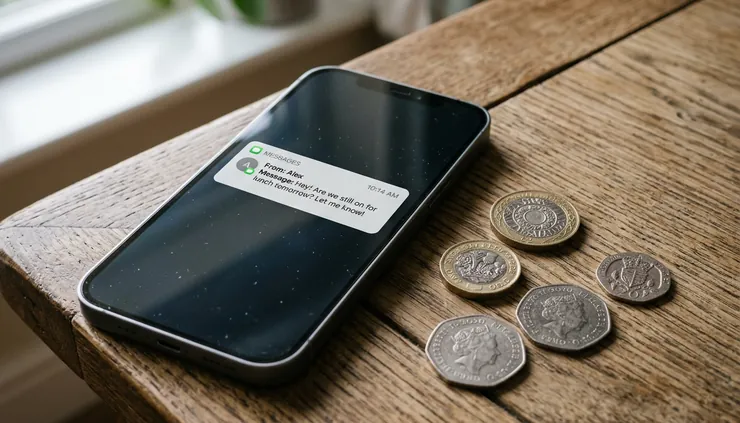
What is included in the cost of business SMS?
Most providers price business SMS around a few core items. Some are obvious, such as the cost to send a message. Others only appear once the account is active, the volume grows, or replies start coming in.
The main cost areas are:
Outbound SMS
The price for each message sent to a mobile number.
Inbound SMS
The cost to receive replies, if the setup supports two-way messaging.
Message credits
Some platforms sell prepaid bundles rather than charging after use.
Sender identity
The name, number, short code, or long code that appears as the sender.
Platform access
A monthly fee for the dashboard, users, automations, templates, reporting, or contact tools.
API access
A fee, usage requirement, or technical setup cost for connecting SMS to another system.
Support and compliance
Help with setup, data handling, opt-outs, delivery issues, and regulatory requirements.
A very cheap advertised SMS rate may only cover outbound messages on a basic route. It may not include replies, reporting, dedicated numbers, integrations, or support. That makes comparisons harder than they first look.
A fair question is not “What is the lowest price per text?” A better question is:
What will it cost to send the right messages, to the right people, with proof that they arrived and a clear way to handle replies?
That is the cost that matters.
The main pricing models for business SMS
Business SMS providers usually use one of several pricing models. Each one suits a different type of usage.
Pay as you go pricing
Pay as you go is common for small or irregular use. You buy credits or pay for each message sent. There is usually no large monthly commitment.
This works well for:
Appointment reminders
Occasional service updates
Seasonal customer alerts
Small contact lists
The downside is that the per-message price can be higher than a volume plan. Credits may also expire with some providers, so the apparent saving can disappear if the messages are not used in time.
Monthly subscription plans
Some providers charge a monthly fee that includes access to the platform, a bundle of messages, or lower per-message rates.
This can make sense when SMS is part of daily operations. For example, a dental practice, delivery company, gym, charity, school, or ecommerce business may send messages every week.
The main thing to check is what happens when the included allowance runs out. Extra SMS may cost more than expected.
Volume-based pricing
High-volume senders often pay less per SMS because they buy larger bundles or agree to monthly usage levels.
This model suits:
Large customer bases
Regular campaigns
Delivery notifications
Authentication codes
Multi-location operations
Volume pricing can reduce the headline cost, but only if the messages are genuinely needed. Sending more messages just to chase a lower unit price is rarely a saving.
API-based pricing
If SMS is sent from a booking platform, CRM, ecommerce store, logistics system, or custom app, API pricing matters.
The SMS itself still has a per-message cost, but there may also be charges linked to:
Developer setup
API access
Webhooks for delivery receipts
Higher throughput
Technical support
Sandbox testing
Custom reporting
For a business that depends on real-time alerts, API reliability can be more important than saving a fraction of a penny on each message.
Why one SMS can cost more than one message
This is where many budgets go wrong. One “SMS” in the message box may count as two, three, or more billable parts.
A standard SMS can contain up to 160 characters when it uses the GSM-7 character set. That covers many common letters, numbers, and symbols. Once a message goes beyond that limit, it becomes a longer linked message made of multiple segments.
For linked messages, each segment usually has fewer usable characters because part of the message is used to join the segments together. A common limit is 153 characters per segment for longer GSM-7 messages.
Unicode characters can also change the cost. Emojis, some accented characters, and non-Latin scripts may reduce the limit to 70 characters for a single SMS, or around 67 characters per segment for linked messages.
That means this short-looking message can cost more than expected:
“Hi Alex, your appointment is confirmed for Tuesday at 14:30. Reply YES to confirm or call us if you need to change it.”
This is likely one SMS in many cases.
This one may become two or more segments:
“Hi Alex, your appointment is confirmed for Tuesday at 14:30. Please arrive 10 minutes early and bring your reference number. Reply YES to confirm or call us if you need to change it.”
The second message may still be useful. The issue is not length itself. The issue is paying for two message parts while thinking you are paying for one.
For high-volume senders, segment count has a big effect. If 20,000 reminders become two-part messages, the billed volume can become 40,000 SMS segments.
Simple formula for estimating SMS spend
Use this basic calculation:
`Number of recipients × message segments × price per segment = outbound SMS cost`
Then add:
`Platform fees + number rental + inbound replies + setup costs + VAT`
For example, imagine a business sends 8,000 appointment reminders per month.
Cost item | Example calculation | Illustrative cost |
Outbound messages | 8,000 one-part texts at 4p | £320 |
Two-way replies | 1,000 replies at 2p | £20 |
Dedicated number | Monthly rental | £15 |
Platform access | Monthly plan | £40 |
Estimated subtotal | Before VAT | £395 |
Estimated total with VAT | At 20% VAT | £474 |
These figures are only an example. Real prices vary by provider, destination, route quality, volume, and features. The table shows the shape of the cost, not a market rate.
Hidden costs that affect the real price
The cheapest business SMS provider is not always the lowest-cost choice. Missed messages, poor reporting, weak support, and messy contact data can all create extra work.
Delivery quality
SMS delivery is not just about sending a message from a platform. Messages travel through routes before they reach a mobile network and the recipient’s handset.
Lower-cost routes may be fine for low-risk updates, but they can be a poor fit for time-sensitive messages such as:
One-time passcodes
Payment reminders
Delivery changes
Urgent service alerts
Appointment confirmations
If delivery is slow, inconsistent, or hard to trace, the business may spend more on customer service calls, missed appointments, and manual follow-ups.
Delivery reports help here. They show whether a message was delivered, failed, expired, or rejected. Not every provider gives the same level of reporting, so check this before choosing a plan.
Dedicated numbers and sender names
A sender ID can affect both trust and cost.
Common options include:
Sender option | What it does | Cost impact |
Shared number | Messages come from a number used by multiple customers | Often cheaper, but less control |
Dedicated long number | A unique mobile-style number for one business | Usually has monthly rental |
Short code | A short number used for high-volume messaging | Usually higher setup and rental costs |
Alphanumeric sender ID | A name appears instead of a number | May have registration or route limits |
A branded sender name can look more familiar, but it may not support replies in the same way a number does. If two-way SMS matters, check this early.
Inbound replies and opt-outs
Many businesses focus only on outbound SMS. Replies can change the cost and the process.
If customers text back “YES”, “STOP”, “CANCEL”, or a free-form message, someone or something needs to handle that reply.
Costs may include:
Inbound message charges
Keyword setup
Auto-response rules
Reply inbox access
User seats
Export tools
CRM updates
Opt-out handling is especially important. A good system should make it easy for people to unsubscribe and stop future texts. This is not just a cost issue. It is a trust issue.
Contact data quality
Bad data makes SMS more expensive. Old numbers, duplicate records, landline numbers, and contacts without consent can waste budget.
Before sending at scale, clean the list. Remove duplicates, confirm mobile number format, and make sure the business has a valid reason to contact each person. In the UK, SMS marketing must follow privacy and electronic communications rules. Service messages and marketing messages are not treated the same, so get proper guidance where needed.
Clean data improves cost control because fewer messages fail or go to people who should not receive them.
How business SMS costs compare with its value
Cost alone does not show whether SMS is good value. A message that costs a few pence can save far more if it prevents a missed appointment, reduces inbound calls, or confirms a delivery time.
Think about the use case.
Appointment reminders
For clinics, salons, repair services, restaurants, and local services, missed appointments can be costly. If a reminder reduces no-shows, the return can be clear even at modest SMS volumes.
A simple reminder might say:
“Reminder: your appointment is tomorrow at 10:00. Reply C to confirm or R to rearrange.”
Short, clear, and easy to act on.
Delivery and order updates
Customers often check SMS faster than email. For delivery changes, collection codes, and time windows, SMS can reduce “Where is my order?” contacts.
The value may come from fewer support requests rather than direct sales.
Payment and account notices
SMS can prompt quick action when a message is clear and expected. It works best when the text links to a trusted process, avoids sensitive details, and uses plain language.
Security matters here. Avoid putting private information in SMS. Keep the message brief and direct people to a known, safe channel.
Marketing campaigns
Marketing messages need extra care. The contact list must have suitable consent, the offer must be relevant, and the opt-out must be easy.
SMS marketing can perform well when it is used sparingly. Too many texts can lead to unsubscribes and complaints, which harms long-term value.
How to reduce business SMS costs without hurting results
Reducing SMS spend should not mean sending weak messages through unreliable routes. The aim is to remove waste.
Keep messages short
Write the message, then cut anything that does not help the recipient act.
Good SMS copy usually includes:
Who the message is from
Why the message matters
What the person should do next
Any deadline or key time
A clear opt-out for marketing texts
Avoid long greetings, repeated details, and unnecessary links.
Check character count before sending
A character counter can prevent an accidental jump from one segment to two. Watch for emojis and special characters as well. They can change the encoding and reduce the character limit.
Even one symbol can affect how the message is billed.
Segment your audience
Do not send every message to every contact. Send to people who are likely to need that message.
For example:
Appointment reminders only to people with upcoming bookings
Delivery updates only to affected postcodes
Renewal reminders only to expiring accounts
Offers only to customers who agreed to marketing
Better targeting cuts cost and reduces complaints.
Use templates carefully
Templates save time and reduce errors, but they can also create longer messages than needed. Review templates often, especially when extra fields are added.
A template with a long address, long customer name, or full booking details can tip into extra segments.
Choose the right sender setup
A dedicated number may cost more each month, but it can make replies easier and reduce customer confusion. A shared number may cost less, but can limit control.
The cheaper choice depends on the workflow.
Review reports every month
Monthly reporting helps spot waste. Look at:
Failed messages
Long messages with multiple segments
High opt-out rates
Low reply rates
Duplicate sends
Campaigns with poor results
Small fixes can make a big difference over time.
What to ask before choosing a business SMS provider
Before comparing prices, ask for a clear breakdown. A good provider should be able to explain the full cost in plain language.
Useful questions include:
What is the price per SMS segment?
Are prices different for UK and international numbers?
Is VAT included or added later?
Are inbound replies charged?
Is there a monthly platform fee?
Do message credits expire?
Is a dedicated number included?
What does sender ID setup cost?
Are delivery reports included?
Can the platform handle opt-outs automatically?
Is API access included?
What support is available if messages fail?
Are there minimum monthly spends or contracts?
Also ask how long messages are counted. If the platform shows segment count before sending, that is a practical advantage.
For the clearest comparison, give each provider the same usage example. For instance:
10,000 UK messages per month
Mostly one-part reminders
Around 1,500 inbound replies
One dedicated number
Two users
Delivery reports required
API access needed
This gives a more realistic quote than asking for a generic SMS rate.
So, how much should you budget?
There is no single answer because business SMS pricing depends on volume, message length, destination, sender setup, and the features required. Still, the cost usually falls into three broad layers.
Usage level | Typical setup | Budget focus |
Low volume | Pay as you go credits and basic dashboard | Avoid expiring credits and high minimums |
Regular use | Monthly plan, sender number, reporting, replies | Balance platform fee with message rate |
High volume | Contract pricing, API access, delivery controls | Compare route quality, support, and total cost |
The best budget starts with real usage, not guesswork.
Estimate:
How many people will receive messages each month.
How many segments each message is likely to use.
How many replies are expected.
Which sender type is needed.
Whether a dashboard, API, or integration is required.
How much support and reporting the team needs.
Once those numbers are clear, the true cost becomes much easier to compare.
Business SMS is rarely just “a few pence per text”. The real price includes the message, the route, the sender identity, the replies, the platform, and the time saved or lost around it.
A low SMS bill is useful only if the messages arrive, make sense, and help people act. Start with a clean list, keep messages short, check segment counts, and choose a provider that shows the full cost before you send. That is how business SMS stays both affordable and effective.