How to Warm Up a New SMS Sender ID or Number for High Deliverability Step by Step Strategy

A new SMS sender can look suspicious before it has done anything wrong. Carriers, aggregators, and filtering systems do not know whether the traffic will be wanted, compliant, and consistent. If a new Sender ID or number suddenly sends thousands of messages, filtering can start quickly.
That is why warm-up matters.
Warming up a new SMS Sender ID or number means starting with low, steady sending volumes, watching delivery signals, and increasing traffic only when performance looks healthy. Done well, it helps build sender trust, protects customer experience, and gives your SMS programme a stronger base from day one.
This guide explains a practical step-by-step strategy for warming up an SMS Sender ID, long code, short code, toll-free number, or virtual mobile number without damaging deliverability.

Why warming up an SMS sender affects deliverability
SMS may feel simple, but the delivery path is not. A message can pass through several systems before it reaches a phone. Those systems look for risk signals, including sudden volume spikes, suspicious links, poor opt-in quality, high complaint rates, and repeated failed deliveries.
A new sender has no sending history. That makes the early stage important.
Warm-up helps prove three things:
The sender is legitimate.
Recipients expect the messages.
Message patterns are stable and safe.
Carriers and messaging providers tend to favour senders that behave predictably. A sender that starts small, sends to engaged contacts, and maintains low opt-out rates is less likely to trigger filtering than one that launches at full scale on day one.
This does not mean warm-up can fix bad list quality. It cannot. If recipients did not consent, or if the list is old, bought, scraped, or unclear, deliverability will suffer. Warm-up works only when the foundation is clean.
SMS deliverability also depends on region and sender type. In some markets, alphanumeric Sender IDs are common. In others, registered long codes, short codes, or toll-free numbers may be required. Each route has its own rules, throughput limits, and registration checks. Before sending, confirm what applies to the countries you target.
Prepare the sender before sending the first message
A strong warm-up starts before the first SMS leaves the platform. The goal is to remove obvious risk factors so early sending data reflects real engagement rather than preventable problems.
Confirm consent and list quality
Start with people who have clearly opted in. Ideally, they recently gave consent and have already interacted with your organisation. Fresh, engaged contacts are safer than old records pulled from a database.
Before launch, remove:
Invalid or badly formatted numbers
Landlines where SMS is unlikely to work
Duplicate numbers
Contacts without clear consent
Suppressed, unsubscribed, or complained contacts
Very old contacts that have not engaged for a long time
If possible, segment your first warm-up sends by engagement. Send first to the people most likely to recognise the sender and value the message.
Set expectations at opt-in
Recipients should know what kind of messages they signed up for. If someone opts in for delivery alerts, do not start by sending offers. If they signed up for appointment reminders, keep the content tied to that purpose.
Clear expectations reduce opt-outs and complaints.
A good opt-in flow explains:
Who is sending
What type of SMS the person will receive
How often messages may arrive
How to opt out
Any charges or conditions where legally required
Register the sender where required
Some regions and routes require registration before high-volume sending. This is common for certain long code, toll-free, and Sender ID use cases. Registration may include business details, sample messages, opt-in proof, and use-case information.
Do this early. Sending before approval, or changing the use case after approval, can cause delays and filtering.
Build compliant message templates
Warm-up is not the time to test risky copy. Keep messages clear, useful, and expected.
Use templates that include:
A recognisable sender name where appropriate
A clear reason for the message
Simple language
A working opt-out instruction, such as “Reply STOP to opt out”
Links only when needed
Full links from trusted domains rather than suspicious short links
Avoid heavy punctuation, exaggerated claims, misleading urgency, and link-only messages. A short plain message often performs better than one that looks promotional or vague.
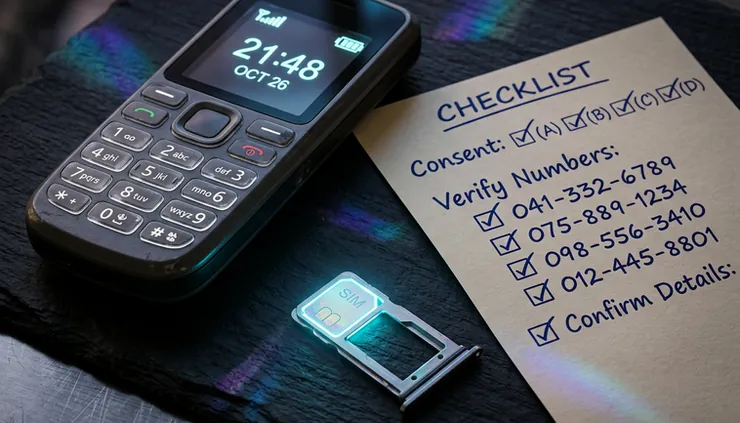
Follow a measured SMS warm-up schedule
There is no universal warm-up schedule that fits every sender. The right pace depends on route type, country, provider limits, use case, list quality, and expected volume. A transactional sender with highly expected messages may warm differently from a marketing sender.
The principle is simple: start low, increase gradually, and pause if signals weaken.
Below is a practical example for a new sender with a clean opt-in list. Treat it as a planning model, not a fixed rule.
Warm-up phase | Sending approach | What to watch |
Days 1 to 2 | Send a small batch to the most engaged contacts | Delivery receipts, failed numbers, early opt-outs |
Days 3 to 5 | Increase volume only if results are stable | Complaint signals, STOP replies, link issues |
Days 6 to 10 | Add more segments and keep content consistent | Delivery rate changes, carrier-specific drops |
Days 11 to 14 | Move towards normal campaign volume | Sudden filtering, unusual failure codes |
After day 14 | Keep volume steady and avoid sharp spikes | Long-term engagement and opt-out trends |
For low-volume senders, the warm-up period may be shorter. For larger programmes, it may take several weeks. The safest approach is to grow in controlled steps instead of racing towards full volume.
Step 1. Start with your best audience
Begin with recipients who recently opted in, recently purchased, booked, registered, or interacted. These contacts are more likely to recognise the sender and less likely to complain.
Avoid starting with dormant or imported contacts. If people do not remember signing up, the first send can create the wrong signals.
Step 2. Keep the first messages useful
The first messages should have a clear service value. Examples include:
Appointment reminders
Delivery notifications
Account alerts
Booking confirmations
Welcome messages requested by the user
If the sender is used for marketing, start with a simple welcome or preference message rather than a hard sell. Make the connection between opt-in and message obvious.
Step 3. Increase volume in stages
Do not jump from a few hundred messages to tens of thousands overnight. Sudden spikes can look risky, especially from a new sender.
Increase gradually while checking performance after each stage. If delivery remains stable, opt-outs stay low, and failure rates look normal, continue. If results drop, hold the volume or step back.
Step 4. Spread sends across sensible windows
Send when recipients are likely to expect and read the message. Avoid unusual hours unless the message is urgent and transactional.
For national campaigns, consider time zones where relevant. For service messages, align sends with the customer action, such as a booking, delivery event, or account update.
Step 5. Keep sender identity consistent
Changing the sender name, number, domain, or message style during warm-up can confuse recipients and weaken trust signals.
Use one clear identity. If you must use several senders, warm them separately and track each one on its own.

Monitor delivery signals and adjust the plan
Warm-up is not just a schedule. It is a feedback loop. The numbers tell you whether to continue, slow down, or investigate.
Track performance at sender level, campaign level, and carrier or country level where your provider makes that data available.
Watch delivery receipts and failure reasons
Delivery receipts help show whether messages reached the handset or failed along the way. They are not perfect in every market, but they are still useful.
Look for patterns such as:
Sudden increases in failed messages
Failures concentrated on one carrier
Delays that affect time-sensitive messages
Repeated invalid or unreachable numbers
Unusual filtering or blocked-message indicators
If one carrier performs worse than the others, do not assume the whole sender is failing. The issue may relate to routing, content, or carrier-specific filtering.
Track opt-outs and complaints
Opt-outs are a normal part of SMS. A sudden rise is a warning sign.
High opt-outs can mean:
The audience did not expect the SMS
The message did not match the opt-in reason
The sender was not recognised
The frequency feels too high
The offer or content lacks value
Complaints are more serious than opt-outs. If your provider reports complaint data or abuse signals, treat them as a reason to pause and review consent, copy, and targeting.
Test links carefully
Links can affect SMS filtering. Use domains that recipients recognise and that match your organisation. Avoid free link shorteners, misleading redirects, and newly created domains with no history.
If you include links, test them before sending. Make sure they load quickly, work on mobile, and do not route through suspicious chains of redirects.
A safe link setup includes:
HTTPS pages
Clear domain names
Mobile-friendly landing pages
No forced downloads
No mismatch between message promise and page content
Compare segments, not just totals
A total delivery rate can hide problems. Break results down by audience source, message type, carrier, region, and send time.
For example, if recent opt-ins perform well but older contacts produce more opt-outs, keep warming with the recent segment and re-permission or retire the older group.
Good warm-up decisions come from patterns, not guesses.
Avoid common mistakes that hurt new SMS senders
Many deliverability problems come from avoidable choices. Warm-up works best when the sending behaviour looks consistent, clear, and wanted.
Sending too much too soon
The most common mistake is starting at full volume. Even with a permission-based list, large first-day sends can trigger review or filtering.
A gradual ramp gives your sender time to build history.
Using mixed use cases on one sender
Do not send password codes, delivery alerts, event reminders, and sales campaigns from the same new number if you can avoid it. Mixed use cases make expectations harder to manage.
Separate transactional and promotional traffic where possible. It keeps reporting cleaner and reduces the risk that one message type damages another.
Ignoring replies
SMS feels personal. If recipients reply with questions, complaints, or STOP requests, those replies matter.
Make sure opt-outs are processed quickly. If two-way messaging is enabled, decide who will handle replies and how fast they will respond.
Changing copy after every send
Testing is useful, but changing too many things during warm-up makes results hard to read.
Keep the core message, link domain, sender identity, and audience quality stable at first. Once the sender has a healthy baseline, test one change at a time.
Reusing email-style marketing copy
SMS is not email. It has less space, more immediacy, and a lower tolerance for vague wording.
A strong SMS message usually answers three questions fast:
Who is this from?
Why am I receiving it?
What should I do next?
If the answer is unclear, rewrite it.

Keep deliverability strong after the warm-up
A successful warm-up is not the finish line. Sender reputation can change if behaviour changes.
Once the sender reaches normal volume, keep watching the same signals. Maintain stable sending patterns where possible. If you plan a much larger campaign than usual, ramp up again rather than creating a sudden spike.
Use these habits to protect long-term SMS deliverability:
Clean lists on a regular schedule.
Remove hard failures and repeated unreachable numbers.
Honour opt-outs immediately.
Keep message frequency reasonable.
Match messages to the original consent.
Avoid sudden changes in sender identity.
Review carrier or provider error codes after every major send.
Keep records of consent and message templates.
If you add a new country, sender type, route, or use case, treat it as a new warm-up. Past success on one route does not guarantee the same result everywhere.
A simple warm-up checklist
Use this checklist before and during launch.
Before sending
Confirm the sender type is allowed for the target country.
Complete any required registration.
Verify opt-in wording and consent records.
Clean the number list.
Suppress unsubscribed and complained contacts.
Prepare compliant message templates.
Test links and landing pages.
Set up reporting for delivery, failures, replies, and opt-outs.
During warm-up
Start with the most engaged contacts.
Send low volumes first.
Increase gradually only when results are stable.
Watch carrier-level patterns.
Pause if opt-outs, failures, or filtering rise.
Keep sender identity and message style consistent.
Process STOP replies quickly.
After warm-up
Keep monitoring sender health.
Avoid sudden traffic spikes.
Separate very different use cases.
Continue list hygiene.
Review performance after every major campaign.
The takeaway
Warming up a new SMS Sender ID or number is a controlled trust-building process. It starts with consent, clean data, compliant setup, and useful messages. Then it relies on gradual volume increases and careful monitoring.
The best strategy is simple: send first to people who expect the message, grow volume only when the data supports it, and pause when warning signs appear.
A new sender does not need to prove everything in one day. It needs to build a healthy pattern that carriers, providers, and recipients can trust.